
Does Winter Make Your Dog Act Out? Here’s Why
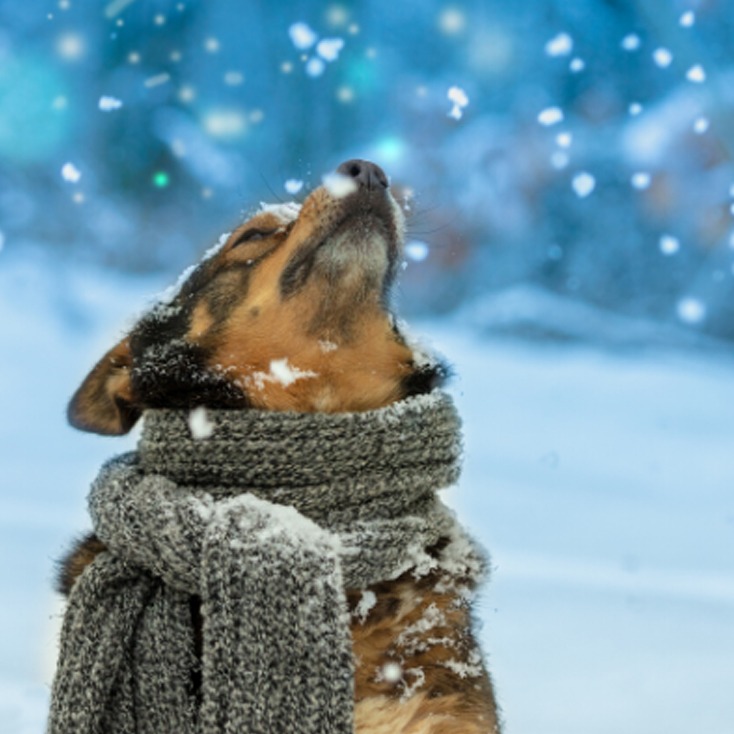
Last year, we published an article exploring whether dogs get the winter blues, and found that yes, our canine friends can experience an emotional slump as the temperatures drop. But, while some dogs seem to get SAD (seasonal affective disorder), other dogs show their naughty side.
In fact, during the colder months, owners may notice more chewing, digging, barking, food aggression, reactivity towards other dogs, and separation anxiety. Is it that they’ve suddenly tapped into their inner Grinch? Or is there something else going on here?
In this article, we’re going to talk about possible reasons why your dog may be showing behavioral issues during winter and what you can do about it.
Cold temperatures may exacerbate physical discomfort
You might have noticed that instead of wanting to cuddle up with you by the fire, your dog becomes standoffish and even sensitive during winter. This can manifest in avoiding your touch or not wanting to jump up on the couch. But in more serious cases, it can look like growling or snapping when touched.
It’s possible that your dog is experiencing pain or discomfort that becomes more prominent when the temperatures drop. It’s a good idea to have them assessed by a veterinarian to rule out a medical reason for their winter grumpiness.
Less exercise can lead to pent up energy
One of the most common causes of behavior issues in dogs is pent up energy. Maybe your backyard is full of snow so your dog can’t run around, or maybe their favorite swimming area is frozen over. Or, even if you live in an area without snow or ice, colder weather often means shorter walks, fewer dogs to play with at the dog park, and less enthusiastic play sessions.
It’s important to remember that exercise is a nervous system regulator. Without it, you might find that your dog becomes more prone to emotional imbalances such as separation anxiety, overstimulation, or reactivity. Or, you might notice behaviors like furniture chewing, digging, or other manifestations of frustration and restlessness.
We know it’s tough, but finding ways to maintain a healthy level of exercise through winter is crucial for your dog’s mental wellbeing. If your physical mobility is limited by weather, consider supplementing with indoor games like tug-of-war or guided obstacle courses. A flirt pole can also be a good way to get your dog’s heart rate up in a smaller space such as a garage.
Winter is like a sensory deprivation tank that your dog did not sign up for
During winter, the world becomes greyscale, the days become shorter, and scent molecules become less active. And this can result in your dog feeling a bit cranky.
Consider the lack of visual stimulation, for starters. Because even though your dog’s vision isn’t their strongest sense, there’s research to suggest that dogs benefit from receiving visual stimulation in their environment.
A study from Animal Welfare found that dogs in shelter settings were more drawn to television monitors with images of other dogs, humans, or animals than a blank screen. Importantly, the dogs that received the visual stimulation barked less and were less restless in their enclosure.
Now, does this mean that you can solve your dog’s destructive streak by leaving the TV on throughout winter? Well unfortunately no. The study showed that screentime engagement decreased overtime. In other words, the doggos eventually got bored and reverted to “problematic behavior.”
Now before we talk about solutions, how about your dog’s other senses, like smell and sound? During winter, these senses are also limited, both by temperature and by snow. On the one hand, snow and ice covers up a lot of smells. This might be why you see your dog exhibiting more digging behaviors in winter; they may be trying to liberate the concentrated scent molecules at ground level. It’s like Nature’s version of a puzzle game.
Snow can also absorb sound waves, making it more difficult for your dog to use their excellent hearing skills. So, you can understand how your dog may become more sensitive to sudden sounds or people passing by on the street simply because they’re not able to use their full range of senses.
What can you do about it? Well, first things first, having compassion can go a long way to keeping your dog calm. But, giving them more chances to engage their senses can also help to ease their mind. To help with the lack of visual stimulation, one option is to swap out their toys every once in a while with brightly colored new ones or make sure that they have a place in the home where they can watch the world outside, even if there’s less to see than there would be in summer.
Taking them with you for school drop offs or errands around town can give them the chance to take in the sights, sounds and smells that they’re not getting at home. Make sure that you install BreezeGuard screens on your back windows so you can drive around with the windows down for the full experience (even if it’s cold!)
Your dog might be hangry
Finally, your dog might be having a hard time in winter because they’re just plain hangry (hungry and angry.) That’s because dogs typically burn more calories during winter to keep their body warm. But, most dog owners don’t adjust their feeding schedule to compensate. You might notice, then, that your dog pesters you earlier and earlier for their meals or begs for food more than usual. They might even revert to bad habits like counter surfing or digging in the garbage.
Before you start adding another cup of kibble to the bowl, consider asking your vet how to safely adjust their daily caloric intake for winter. You might also want to bundle your dog up before going outside, especially if they’re a short-hair breed like a Pitbull or a Vizsla.
Your dog isn’t a Grinch, they’re just struggling
Winter can be a difficult time for everyone, and your dog is no exception! If you’re noticing signs of crankiness, naughtiness, or a teenager-like attitude, remember that this time of year poses unique challenges to your dog. And with some adjustments and compassion, you and your pup can get through the winter months without too much squabbling.
After all, remember that even the Grinch came around in the end!